
From Blooms to Bivalves: Investigating Ecosystem Effects of Harmful Algal Blooms in Glacier Bay National Park
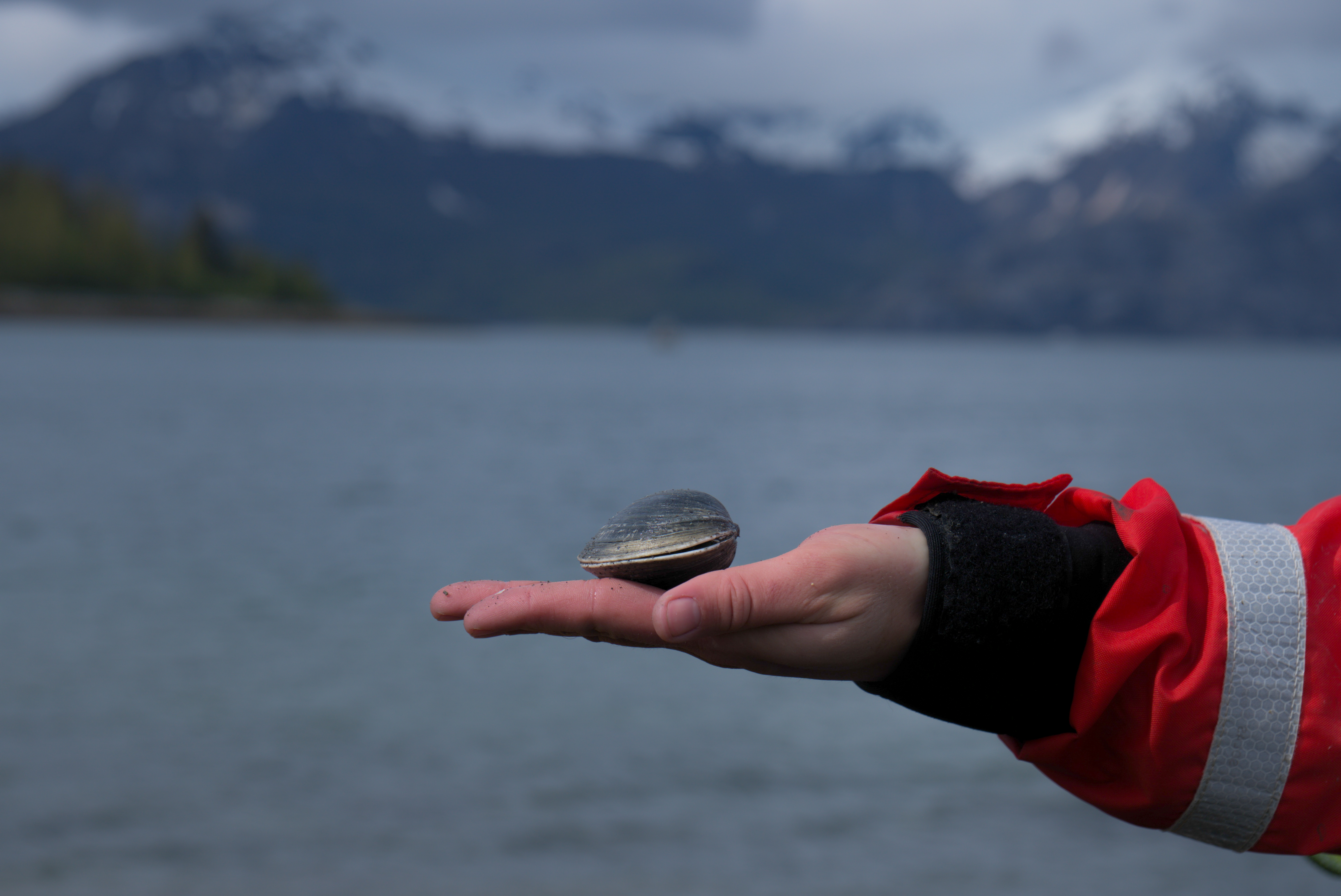
Saxitoxin— a powerful neurotoxin deadly at a dose a thousand times smaller than a lethal dose of cyanide— is the weapon of choice for an endemic phytoplankton of Southeast Alaska. And ACRC Research Assistant Professor John Harley has an overflowing freezer of its potential carriers.
Paralytic shellfish toxins, including a suite of saxitoxins and similar chemicals, are produced by harmful algal blooms (HABs) and can accumulate in the tissues of filter-feeding organisms such as butter clams and forage fish, causing paralytic shellfish poisoning (PSP) if consumed.
Across the icy fjords of Glacier Bay National Park, little is known about the seasonal timing, distribution, and food web impacts of these blooms, especially in light of changing nutrient and freshwater fluxes from the region’s melting glaciers. In tandem with investigators at the National Park Service Glacier Bay National Park, the Hoonah Indian Association, and the National Center for Coastal Ocean Science (NOAA), Harley seeks to address this knowledge gap.
Harley and other researchers have collected phytoplankton samples across Glacier Bay, hoping to build a broader understanding of where harmful algal blooms concentrate and patterns that emerge from ongoing ocean and environmental changes.
Melting glaciers may contribute to the occurrence of harmful algal blooms in the region, which has seen extensive glacial retreat over the last 50 years. The grounding of tidewater glaciers in the area, where they no longer calve into the ocean, has “dramatically altered the chemistry and the physics of the fjords themselves,” according to Harley. Glaciers that are actively calving and producing subglacial discharge create vertical mixing that stimulates phytoplankton growth. Once these glaciers ground out, they no longer discharge subglacially, altering the capacity for vertical mixing and phytoplankton growth in fjords.
“We don't really know enough yet about where these harmful algal blooms are occurring to say for sure that we can tie a HAB event to subglacial discharge. But hopefully that's something that we can tease out with this project,” Harley says.
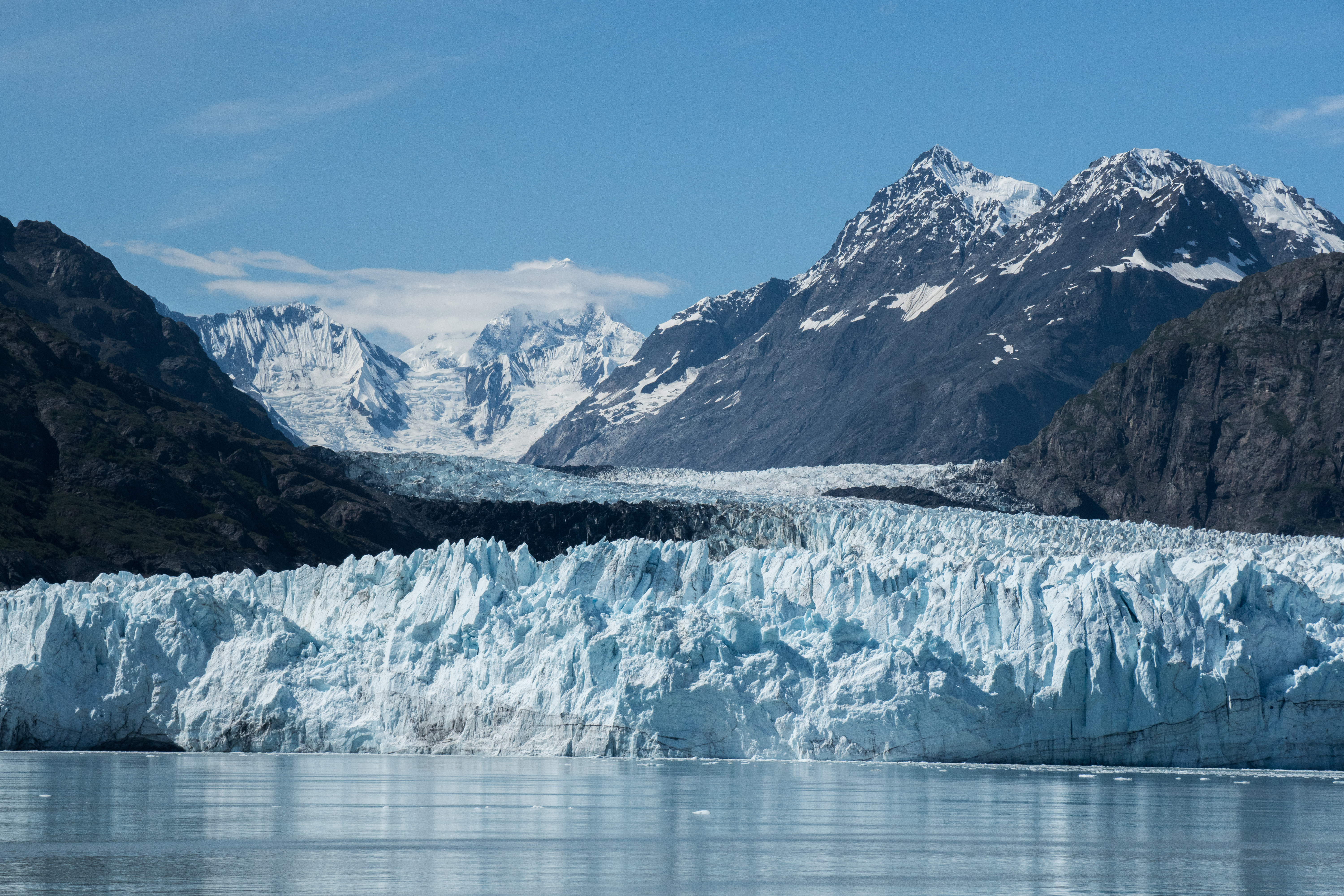
Photo: Tidewater glacier in Glacier National Park near Gustavus, Alaska.
Due to the park’s vast protected coastlines, the marine and terrestrial ecosystems of Glacier Bay uniquely overlap, contrasting interrupted and developed coastlines in other states. Bears, wolves, sea otters, and other species have been observed foraging and hunting in this intertidal zone, raising questions about toxin exposure across both marine and terrestrial ecosystems.
“There’s this really interesting linkage here between the marine and the terrestrial environment that is not common in other parts of the world; the interconnectedness of the ecosystems here allows for transfer of a marine-based toxin into the terrestrial environment,” says Harley.
Coastal Alaska wolves have been observed to hunt and feed in the park’s intertidal zones, where surprisingly, sea otters are a main source of food. A study co-authored by Tania Lewis, co-investigator and wildlife biologist at the National Park, found that sea otters sometimes make up a significant percentage of the wolves' diet, based on DNA identification from scat samples. Now, scientists are questioning if this successful predator-prey relationship is attributed to intoxication from sea otters eating contaminated shellfish. For humans, ingesting saxitoxin can lead to weakness, lack of coordination, and paralysis. If mirrored in mustelids, the biotoxin's neurological effects might make sea otters easy prey and act as a vector for the toxin into the terrestrial ecosystem. According to Harley, this study could be one of the first comprehensive assessments of wolf scat across an entire region for PSP toxins, not only for Alaska, but globally.
Last summer, accompanied by undergraduate students, Lewis and Harley collected shellfish samples and scat from sea otters, bears, and wolves in the region. These samples are currently being tested for PSP concentration to establish how saxitoxins are moving through the tightly connected food webs of the region. When opportunities arise, carcasses of these species, along with those of seabirds—which have experienced global mass mortality events from harmful algal bloom toxins—will be analyzed for saxitoxin content. Harley also intends to continue sampling efforts during the upcoming fieldwork season, bringing along University of Alaska undergraduate students to assist with sample collection.
“It's interesting to think of this study as a moment in time of saying, where do we see the harmful algal blooms occurring within the park? Are they having any impacts? What are those impacts? The national park might look radically different in 50 years; it will be really interesting to hypothesize how HABs and their toxins might change in this rapidly changing landscape.”
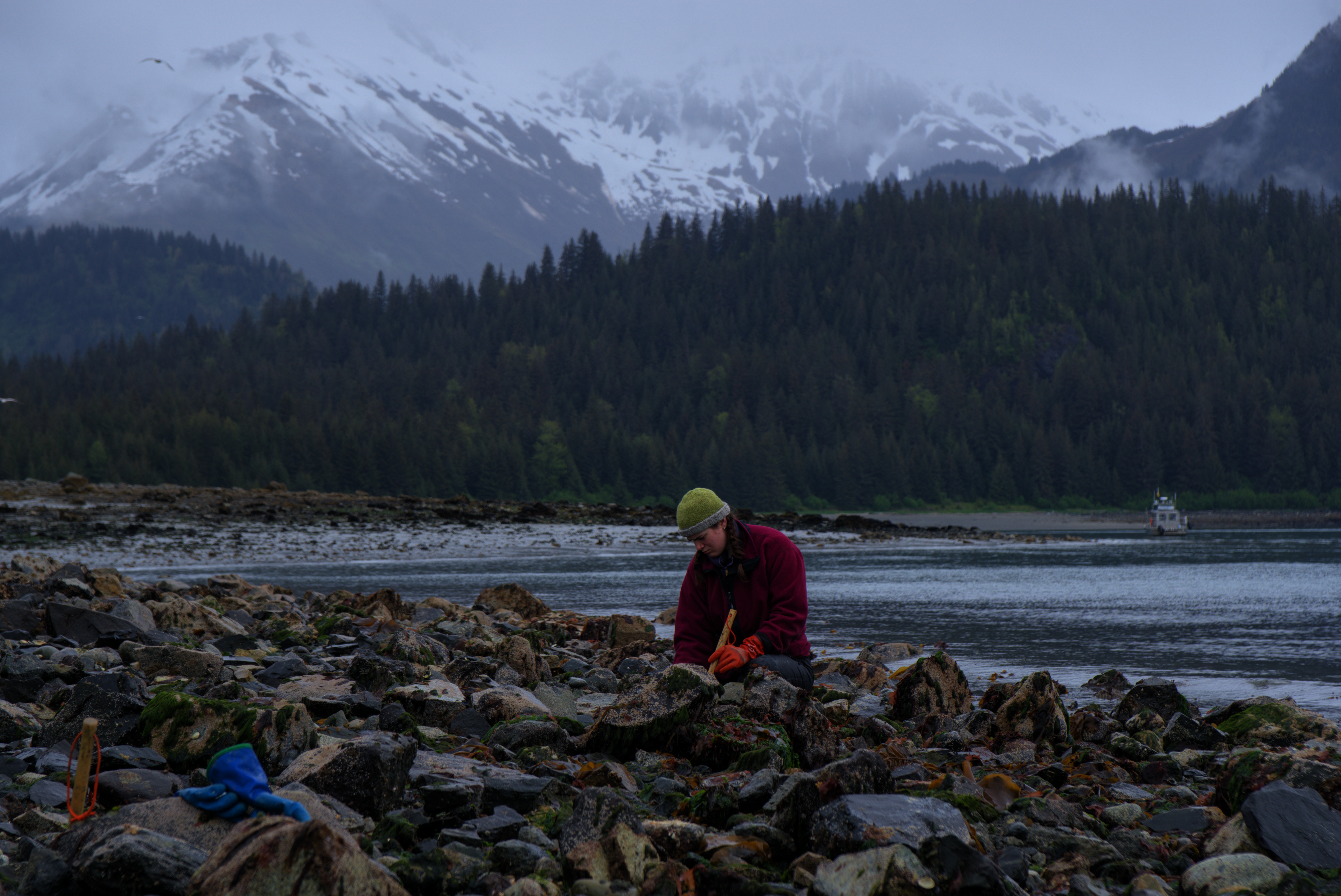
Photo: UAS undergraduate student Amelia Vegors collects butter clams in the park's intertidal to sample for PSP toxins.