
“It’s all connected”: How red seaweed show us complex linkages between land and coastal ecosystems
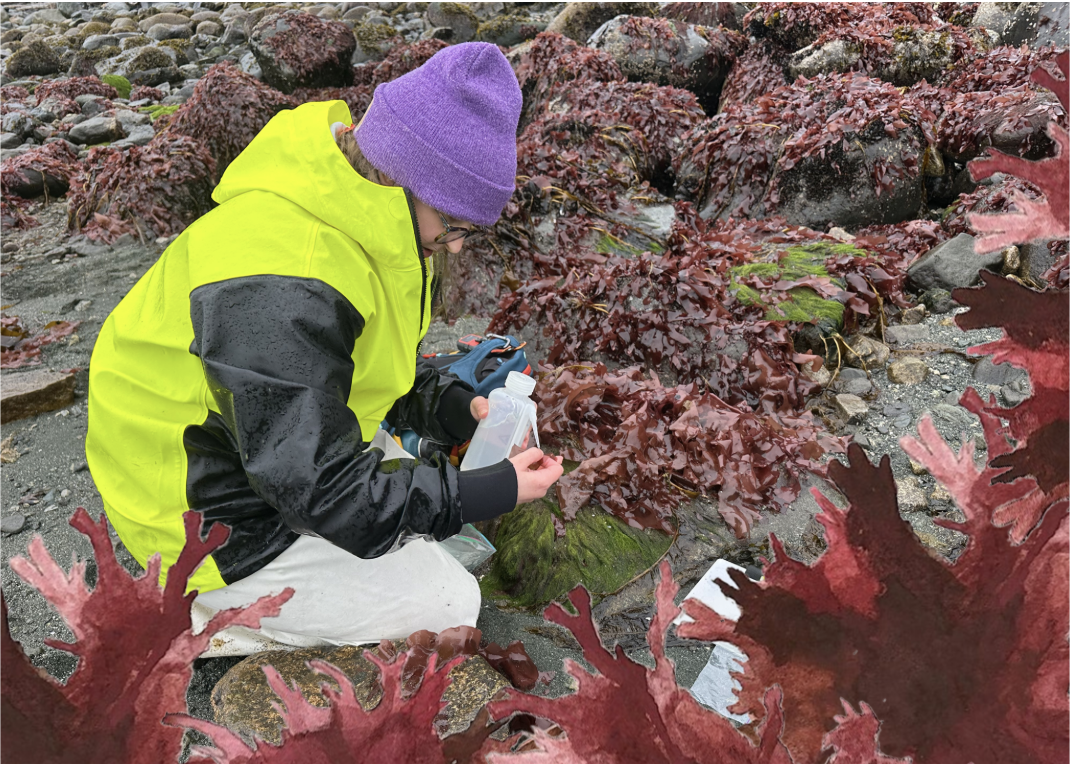
On the rocky shorelines of Haines, Alaska, the lifecycles of seaweed groves are shaped upstream.
Racing against the tide, researchers and community members gather samples across traditional seaweed harvest sites with freezing fingers. Graduate student Lindsay Meyer swears that every time they sample it’s absolute chaos. The wind— strong enough to blow you over— whisks away cooler lids and sample bags as scientists chase them down the peninsula. At the end of the day, Meredith Pochardt, an Chilkoot Indian Association environmental scientist, makes room in her fish freezer for hundreds of the rubbery fronds, ready to be analyzed.
Three years in making, this ongoing research is born of collaboration, bringing in researchers from the Alaska Coastal Rainforest Center and University of Alaska, as well as tribal and community members. Part of the Alaska EPSCoR Interface of Change project, they’re in the midst of studying the interconnectivity of terrestrial and marine environments through downstream impacts to seaweed life cycles.
“It’s a very ambitious project. We’re trying to find the connection between two systems that are adjacent but each one is very complicated,” Schery Umanzor explains. A co-principal investigator on the EPSCoR project and professor at University of Alaska Fairbanks, she credits the emerging field of metabolomics— the study of how cells create and use materials— to being able to tease out how watershed dynamics drive seaweed growth.
“What are the triggers of change in these life stages? For you as a human, what marks change from toddlerhood to childhood, and teenagehood to adulthood?” Umanzor asks. “For us, it's age and time. It's hormones. But for red seaweeds, what are those?”
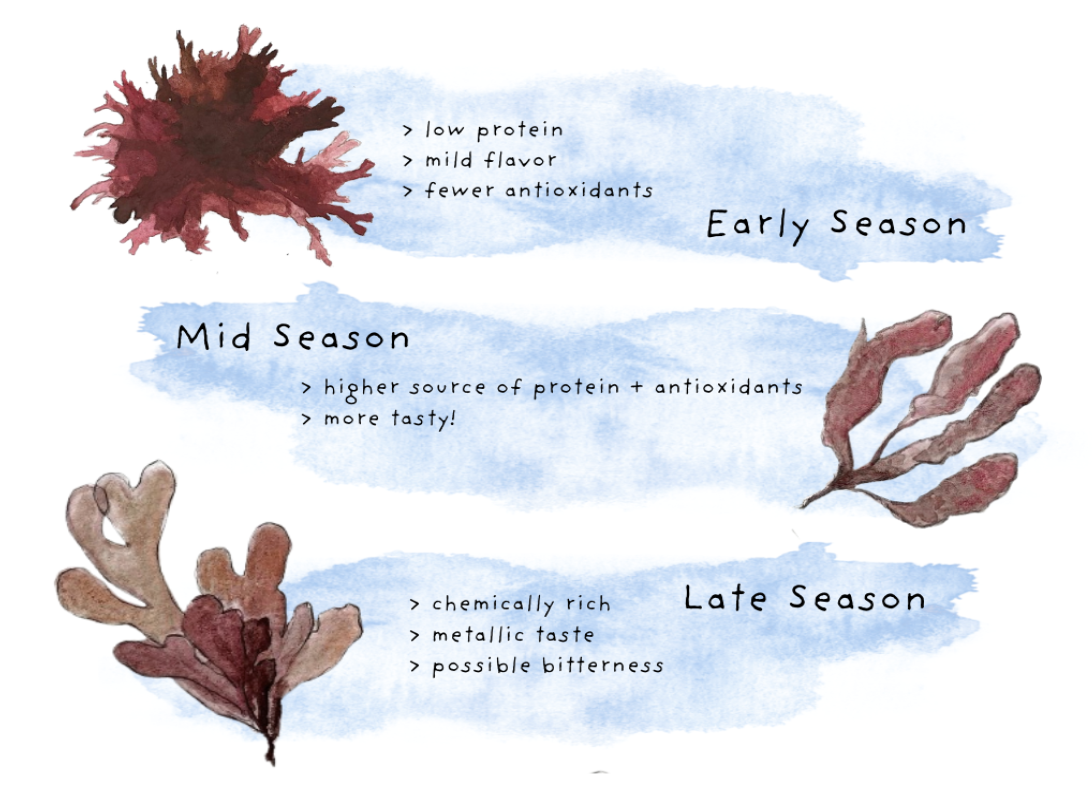
Through processing hundreds of samples at the University of Alaska Anchorage ASET Lab, they’ve found that the best predictor of change is nitrogen—specifically, how it’s utilized can reveal the seaweed’s current life stage. Changes from period to period can shift their taste and flavor, as well as the amount of protein and antioxidants. Understanding these chemical triggers and the associated environmental properties can help uncover future impacts to harvest of this culturally important wildfood.
“When seaweeds are young, they’re using that nitrogen just to consolidate themselves. They’re creating proteins, amino acids, DNA, and photosynthesizing. They’re just getting settled,” says Umanzor. As the seaweed reaches the end of their growth season— when nitrogen levels drop and temperature levels increase—nitrogen starts being used differently. “As the seaweed senesce, nitrogen is used for repairing. You know how when we're younger, if we scratch we heal very fast, and then when we're older, it takes longer? It's the same thing: as the seaweed ages, it goes from settlement growth to more repairing and maintenance.”
It’s no coincidence that red seaweed is richer in protein compared to other seaweed species. Nitrogen, a fundamental component of protein, is the dominant macronutrient in red seaweed biomass. It’s also what piqued curiosity for researchers at the Alaska Coastal Rainforest Center and begged the question: where was all this nitrogen coming from?
Jason Fellman, a co-investigator on the project, suspected the region's rivers might be responsible, potentially acting as a bridge between terrestrial and marine ecosystems. Here, braided rivers entangle in the landscape, gathering nutrients and sediments before flowing into the intertidal. To understand this connection, ACRC partnered with the members from the Chilkoot Indian Association to collect water samples from the region’s four major rivers that contribute freshwater, sediment, and nutrients to the intertidal zone where seaweeds grow. Analyzing for dissolved nitrogen concentrations, they found a seasonal pattern potentially in sync with red seaweed growth.
“During the winter and early spring, nitrogen concentrations are highest in these rivers.” Fellman says. “This period roughly corresponds to when red seaweed is growing rapidly. It's reasonable to hypothesize that riverine nitrogen is contributing to this pool of nitrogen in the marine world that's being utilized by these red seaweeds.”
But rivers are only part of the picture. In the broader context of the watershed and changing climate regimes, nitrogen cycling becomes more complex—and uncertain.
Nitrogen is tightly conserved in terrestrial ecosystems in the region, a critically important nutrient for plants and microbes. Different species use and fix nitrogen in a variety of ways, impacting the concentrations downstream. When winter sets in, tree growth and microbial activity slows, reducing the demand for nitrogen. However, if future climate scenarios shorten the winter season, plants could grow and microbes could remain active for longer periods, potentially allowing nitrogen to be more tightly conserved on land.
Shifting climates could impact red seaweed lifecycles and harvest in other ways as well. Seasonal glacial meltwater brings in a huge influx of sediment, coloring the water a turquoise hue and increasing turbidity downstream. Before, Umanzor says they didn’t understand the impact of sediment on red seaweed until this project. Now, they’re finding that increased turbidity is speeding up their senescence and end of life.
If the glacial meltwater season starts earlier under future climate scenarios, increased turbidity events and sediment could shorten their growing season, impacting harvests of this culturally vital wild food resource. Particularly during winter months, greater rain storm frequency could flush more sediment into the intertidal, negatively affecting red seaweed growth for short periods of time.
“These red seaweeds are very sensitive to any environmental change. Maybe if this is a gradual change in the environment, they will be able to somehow adapt. If it's something like the extreme events that we are seeing, maybe not much,” Umanzor explains. At this stage in the project, much is yet to be teased out and further discovered. “It could very well be that the seaweed adapts by having a shorter life. Maybe they’re super plastic and they actually thrive under these conditions. The thing is, what is beneficial for the organism itself, doesn't mean it's beneficial for people.”
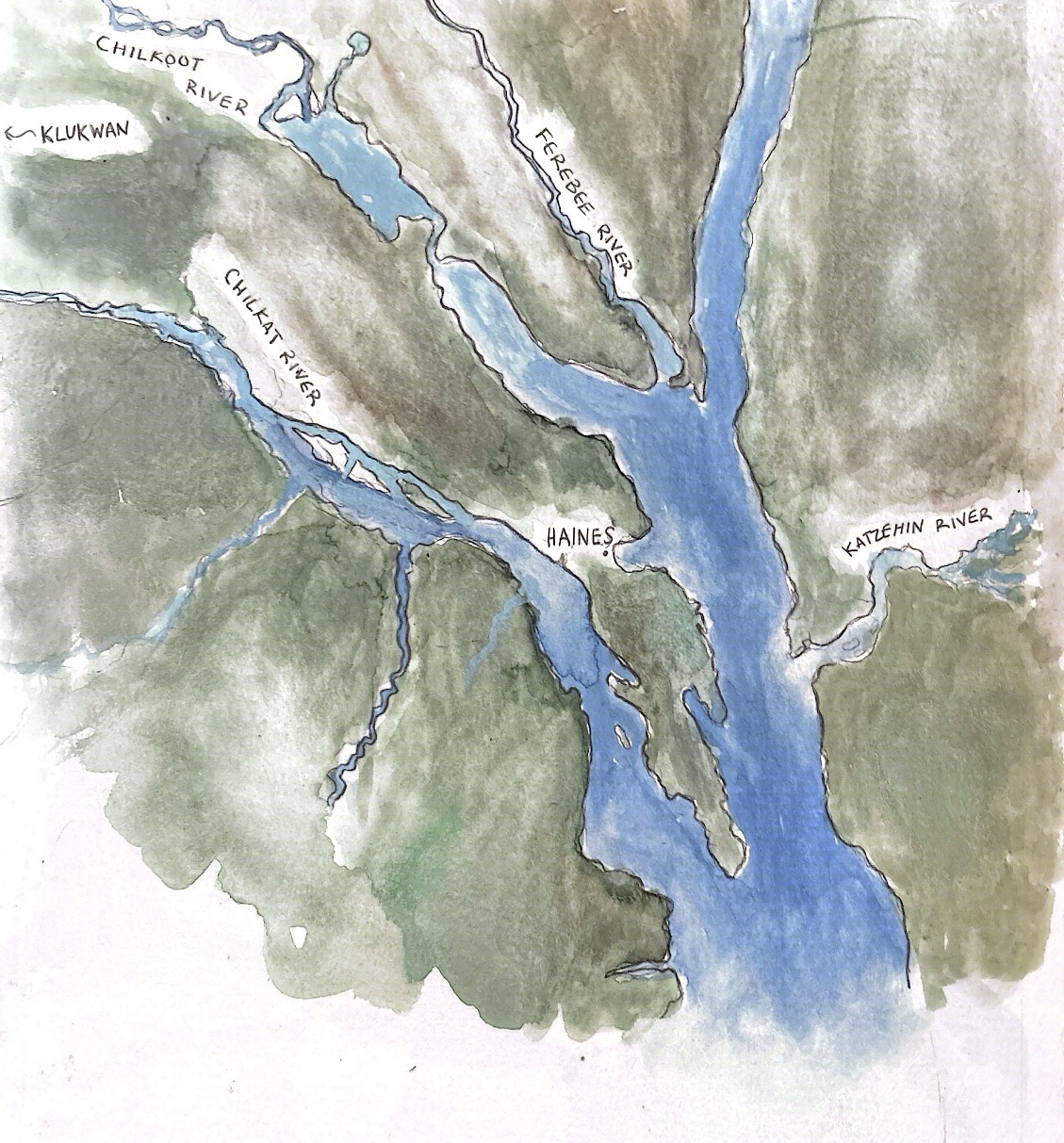 Photo: Four major rivers—including the Chilkat and Chilkoot Rivers, and across the bay in glacially dominated Katzehin and Ferebee Rivers—flow into the region’s marine ecosystems.