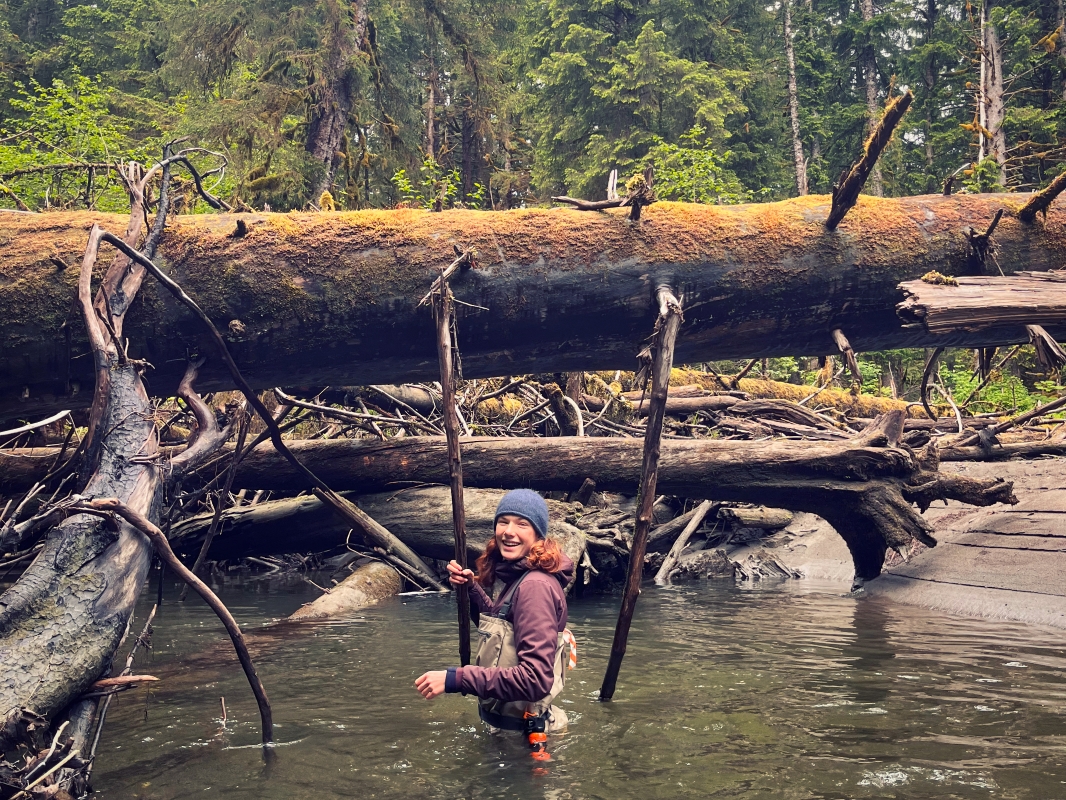
Understanding Glacial Stream Systems - An ACRC intern experience
The Juneau icefield melts into the major watersheds of Juneau, Alaska. These glacial rivers are essential for salmon, whales and all other aquatic wildlife. This summer I worked on research understanding the linked ecosystems within the glacial watersheds with projects that ranged from methane sources to juvenile salmon behavior. The organization I worked with, Alaska Coastal Rainforest Center, is based at the University of Alaska Southeast and is closely connected to the USDA Forest Service to complete research projects.
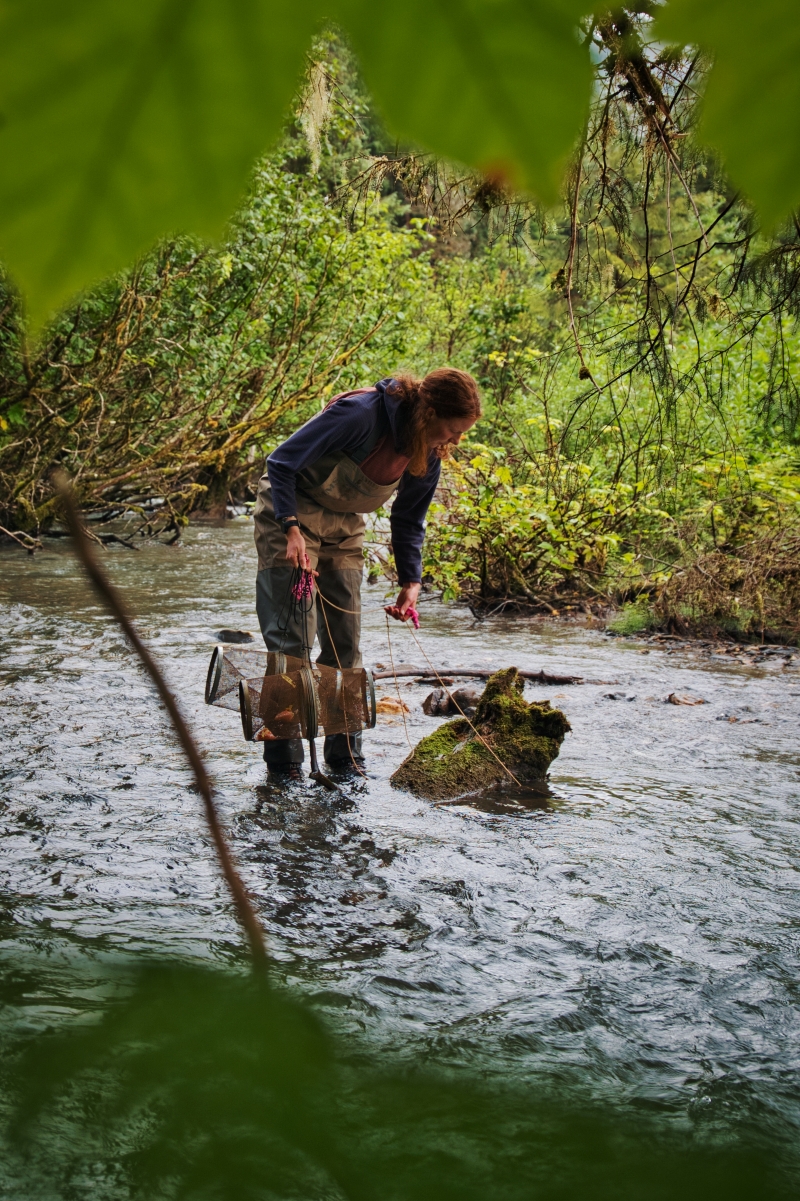
We sampled major rivers on the road system for changing water chemistry, including kayaking to the face of the Mendenhall glacier to sample the sub-glacial outflow. After collecting samples in the field, we processed them in the lab to look at changes over time. I worked with a graduate student from University of Alaska Fairbanks on a juvenile salmon behavior study in the Montana creek watershed. We biked through the rainforest and set minnow traps in spawning salmon habitat. With the juvenile salmon, we collected data on height, weight, diets and PIT tagged the fish. This project looked at the changes in juvenile salmon behavior in extreme weather events, so we would go out into the field on heavy rain days. I learned how to clip salmon fins for a glacial-sourced methane project. This experience was incredibly diverse in both the topics of research and the methods of data collection. In the lab, we prepped isotope samples and measured dissolved organic carbon.