
A Summer in the Streams: My ACRC Internship Experience
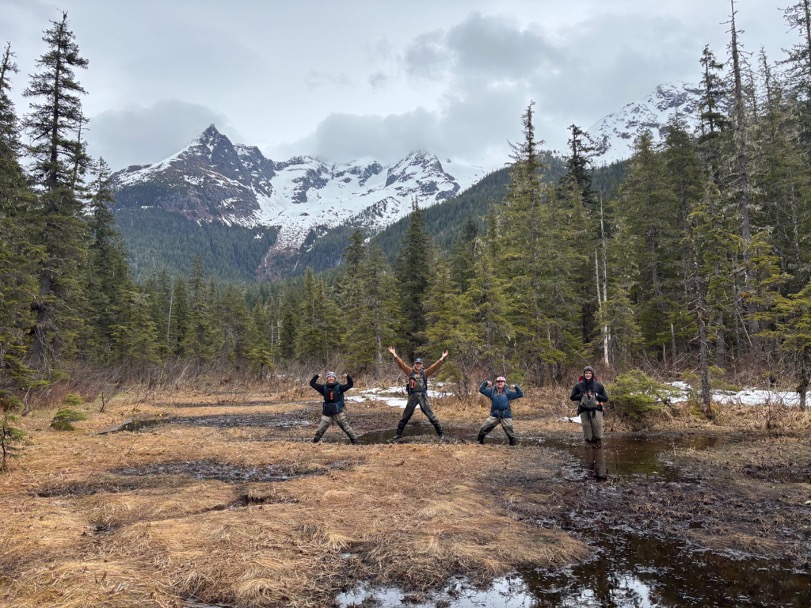
This summer, I had the most incredible time during my internship at the ACRC. As a research assistant, I took part in a wide range of environmental science research projects happening here in the Tongass. Through this internship, I developed skills in scientific fieldwork, lab analysis, and data entry. I participated in a wide variety of research, including weekly stream sampling, paddling on Mendenhall Lake to analyze turbidity, exploring and sampling beaver ponds, analyzing pollutants in the tissue of mussels, and soil science.
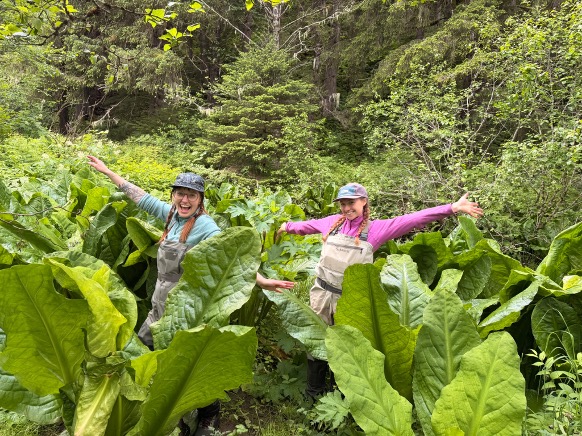
Peterson Creek with fellow ACRC intern Ash Smith.
Stream Sampling
As part of a long-term stream monitoring project, the ACRC gathers water samples from 5 streams along the Juneau road system every week. These streams are Cowee Creek, Herbert River, Peterson Creek, Montana Creek, and Mendenhall River. We collected water samples at each site and used handheld equipment to measure stream height and temperature, conductivity, turbidity, and dissolved oxygen. Samples were processed back at the lab to analyze turbidity, total suspended solids, alkalinity, dissolved organic carbon, and other dissolved matter. It was gratifying to feel myself become more familiar with the procedures and feel confident in my knowledge and abilities.
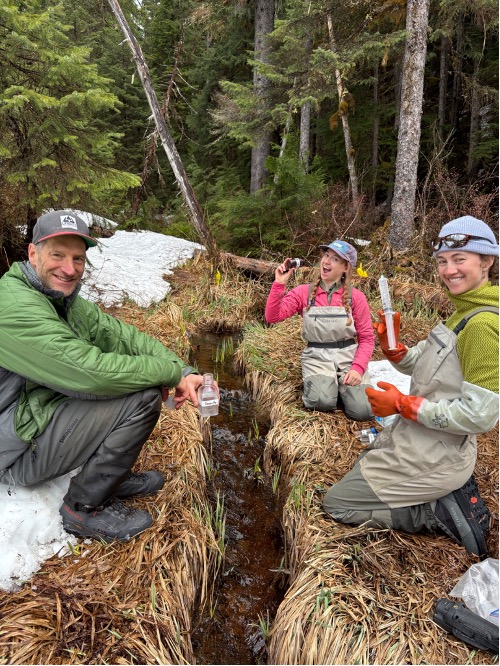
ACRC director Jason Fellman and interns Kelsey Ruzich and
Sydney Jones sampling a stream in the Davie’s Creek watershed.
Working with graduate students
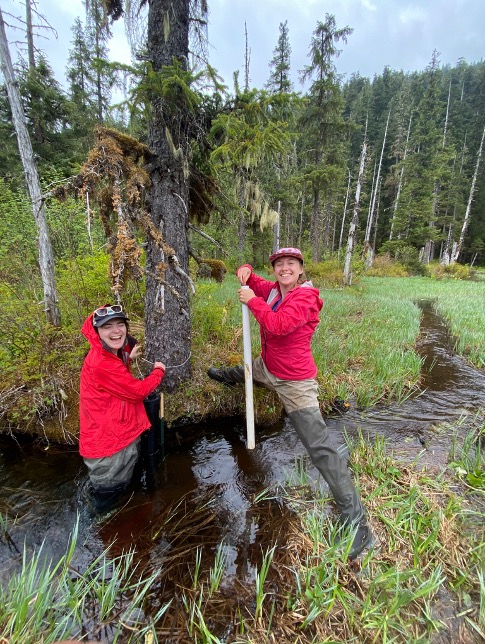
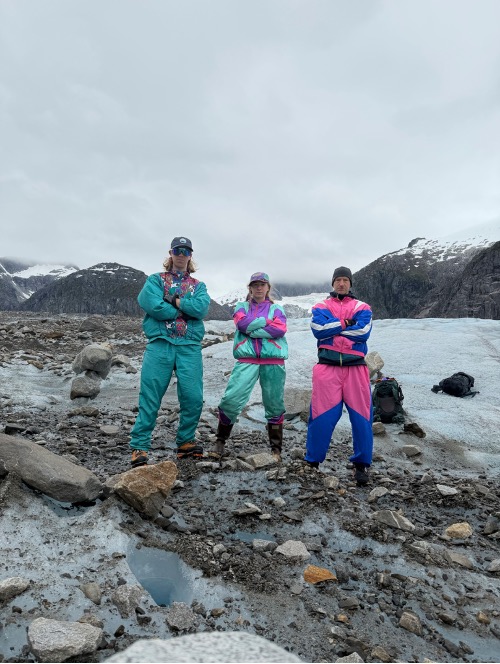
Another unique part of this internship experience was the opportunity to work with graduate students. We assisted graduate students with their fieldwork in a diverse range of research topics, including juvenile salmon behavior, beaver pond biogeochemistry, and glacial stream biogeochemistry. It was incredibly valuable to spend time with and learn about the educational journeys of the graduate students, as well as be inspired by their passion for their research and why they chose to pursue it. This allowed me to get answers to my questions about grad school and weigh the different options.
 |  |
Aquatic Pollution in Mussels
I also spent a week helping UAS professor and researcher Megan Behnke on her pilot study looking at pollutant accumulation in Pacific mussels. After collecting mussels from the intertidal zones around Juneau, we went back to the lab, shucked and blended the tissue to be sent off to a different lab to be analyzed. The purpose of this research is to see if evidence of scrubber discharge from cruise ships is present, since mussels tend to bioaccumulate pollutants in the water easily.
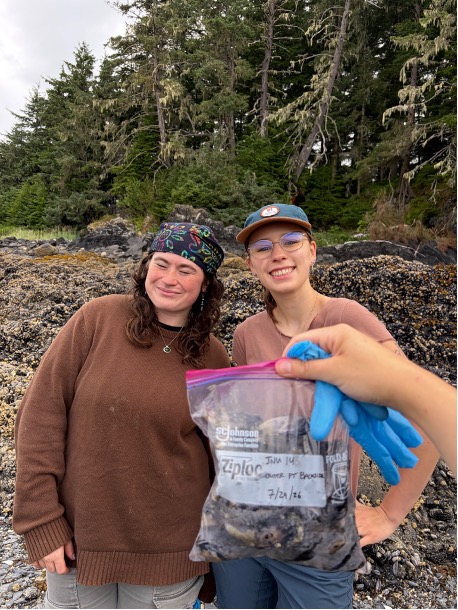
interns Taylor Saulsbury and Jasmine Louwagie.
Cedar Soil
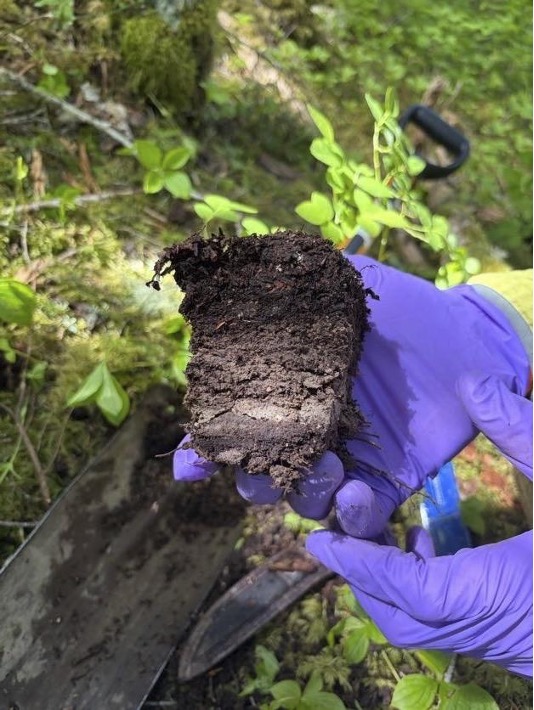
We were also given the opportunity to pursue our own personal research projects in an area of interest. For my project, I chose to focus on soil science. Since the ACRC operates out of the Juneau Forestry Sciences Laboratory and works closely with the Forest Service scientists there, I was able to collaborate with and learn from Forest Service soil scientist Dave D’Amore on his yellow cedar research. This opportunity meant a lot to me because soil science has been an area of interest for me. I learned about soil chemistry as it relates to yellow cedar decline and engaged in extensive lab analysis to look at soil acidity, moisture content, and nitrogen mineralization. We even got to present our research to the lab and community members at the end of the summer, which was both nerve-racking and exciting!
My experience as an intern this summer at the ACRC taught me so much about environmental science. I will always be grateful for the opportunity to learn about the vital research taking place here in the Tongass alongside many passionate scientists and fellow students.